

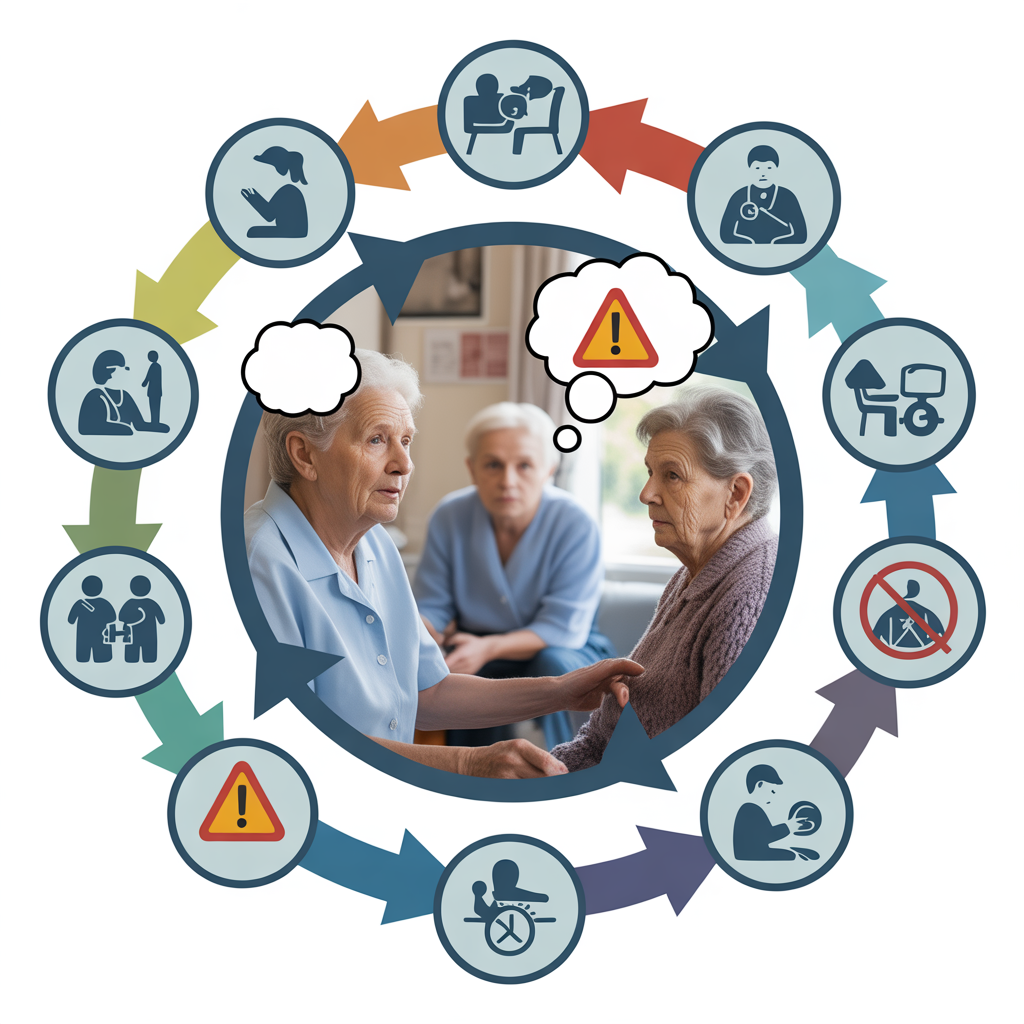
Why Incidents Repeat in Dementia Care — and What Most Communities Miss
Falls repeat.
Escalations repeat.
Exit-seeking behaviors repeat.
In many dementia care communities, these events are treated as isolated incidents. But they rarely are.
Repeated incidents often follow identifiable patterns — patterns that go unnoticed when documentation is fragmented, handoffs are inconsistent, and observations vary between staff members.
The Hidden Driver: Pattern Blindness
Dementia-related incidents often emerge from combinations of:
-
Time-of-day vulnerabilities
-
Environmental overstimulation
-
Routine disruption
-
Staffing variation
-
Unrecognized behavioral triggers
When these contributors are not captured consistently, teams remain reactive.
Incident reviews may occur — but without structured pattern analysis, the same cycles reappear.
Why Traditional Documentation Falls Short
Most documentation systems are designed for compliance, not pattern detection.
They record events.
They do not illuminate repetition trends across roles and shifts.
Without structured visibility:
-
Teams cannot align around contributing factors.
-
Leaders cannot identify operational instability early.
-
Families experience repeated reassurance instead of visible prevention.
Moving From Event Reporting to Stability Monitoring
Reducing repeat incidents requires:
-
Consistent observation language
-
Cross-shift alignment
-
Structured review of contributing factors
-
Coordinated response planning
Dementia care stability is not achieved by reacting faster.
It is achieved by recognizing patterns earlier.

0 Comments